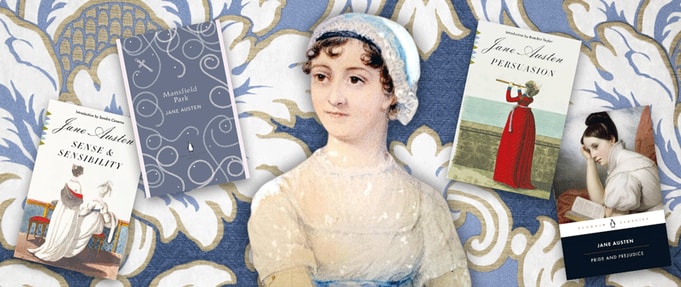
Jane Austen has been a household name for years, and with good reason. Austen redefined the novel two centuries ago, shaping narrative fiction as we know it. The nostalgic, quiet storylines and regency romances have come to be considered classics, and rightfully so.
By now, almost everyone has heard of swoon-worthy characters like Mr. Darcy and Mr. Knightly, and we all remember that hand twitch in the 2005 film adaptation of Pride and Prejudice.
While these romances may be center screen for modern audiences, there’s even more to love within the pages of Jane Austen’s novels.
1. Relatable Characters
Jane Austen’s characters are complex portrayals of human nature. Austen reveals motives, regrets, flaws, and attributes of all of her characters in a way that demonstrates their humanity. John Willoughby is a wonderful example of this.
In Sense and Sensibility, Willoughby begins as a noble savior of Marianne and attempts to woo her, but his greed and pettiness reveal themselves when he writes a scathing, cruel letter that tarnishes the audience's perception of him.
Eventually, he recognizes the cruelty of his behavior and attempts to repent for it. Willoughby is not a villain; he’s human. Austen’s protagonists are just as versatile.
Emma Woodhouse, the central focus of Austen’s Emma, is introduced as a woman whose vanity and stubbornness hinder her emotional maturity, and her actions often reflect this. Despite that, Emma is one of readers’ most-loved characters, because she is accessible.
2. Relevant Social Commentary
Running in the same vein as her relatable and relevant characters is Jane Austen’s timeless commentary on social structures. Austen’s criticisms of the prejudice against women, the frivolity of the upper class, the dangers of an uneducated population, and the sanctity of marriage are all relevant today.
By writing characters who uphold these values, she creates a portrait of what an ideal society looks like, which draws an even sharper comparison to the reality of the British gentry and the world that Austen lived in.
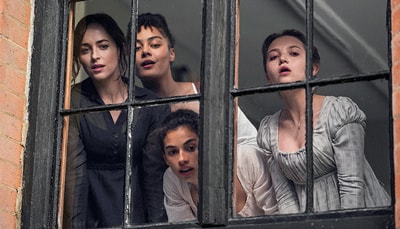

Still from the Netflix adaptation of Persuasion, starring Dakota Johnson (2022).
Photo Credit: Netflix3. Versatile Female Characters
While all of Jane Austen’s characters exhibit subtle depth, her female characters have had an especially significant impact on how women are represented in literature and perceived in real life.
In Pride and Prejudice, Elizabeth Bennet is an exceptionally intelligent, quick-witted woman who advocates for her own interests.
Elizabeth is flawed, sometimes even abrasive, but manages to overcome her own prejudices and change her perspective on love without sacrificing her agency. Though many of Austen’s female characters find love, there are also those whose lives are fulfilled without it, much like Jane Austen herself.
4. Masterful Writing
Anyone who has read Jane Austen knows that, while her prose may not go down easy at first bite, there is a beautiful rhythm and art to her words waiting to be discovered. Her writing is a blend of romanticism and neoclassicism that allows her to be imaginative and practical at once, a key feature of her personal style.
Austen’s artful command of language is demonstrated through her diction, which is both sophisticated and accessible to audiences. Her use of irony and burlesque further defines Austen’s novels, in which the exaggeration of something otherwise quite serious serves to make the subject playful or critical.
This is the heart of Austen’s unique satire and shapes her stories.
5. Use of Indirect Discourse
If anyone has ever doubted the literary merit of Jane Austen’s works, we have two words: indirect discourse. Indirect discourse is a literary technique in which the narrator’s voice is blended with that of the character, creating textual cohesion that facilitates deeper engagement and narrative understanding.
Rather than telling the audience how the character feels or what they are thinking, Austen popularized the idea of presenting the character’s thoughts as if they were the narrator’s own. This tactic moves readers out of the third-person perspective and offers a window into the characters' own perspectives.
Take Emma, in which indirect narration lets readers sympathize with Emma despite her flaws and mistakes. While indirect discourse existed before Jane Austen started writing, Austen developed it and inspired its widespread use throughout the modern literary canon.
6. Period Setting
Who doesn’t enjoy a cozy regency setting? Jane Austen is, at times, synonymous with period pieces. Films based on her books feature the beautiful architecture, dress, and language of the time set against sweeping English landscapes (rainy fields perfect for a brooding Mr. Darcy).
Austen’s novels are just as picturesque, as they are romantic. The grace of her prose paints a nostalgic and intimate portrait of Regency-era England that is easy to be swept away in.
7. Sense of Escapism
And swept away, you shall be. Even if period pieces are not your cup of tea, it’s difficult not to be transported by Austen’s voice, her characters’ real struggles and triumphs, and the undeniable romance of her stories.
During World War I, Austen’s books were popular among British soldiers, who turned to her writing for solace amid the horrors of the front. Whether you’re in the trenches physically or metaphorically, Austen’s novels provide a cozy escape to a different time and place.
8. Regency Romance
We would be remiss not to mention Jane Austen’s commitment to writing beautiful, meaningful, and absolutely swoon-worthy romances in her novels. Austen loved love. Romance is not the primary focus of Austen’s novels, nor is it at the forefront of every character’s mind, but it plays an undeniably significant role in her stories.
Elizabeth Bennet and Mr. Darcy, Emma and Mr. Knightley, Elinor and Edward, the list of perfect pairings goes on. But Austen did not write insta-love, short-and-sweet romances. She wrote as many cautionary tales of love rushed too soon, falling for the wrong person at the wrong time, and of settling for anything less than love as she wrote happy-ever-afters.
Austen’s romantic storylines are often pragmatic and anything but fairytales… but that doesn’t make them any less enticing.
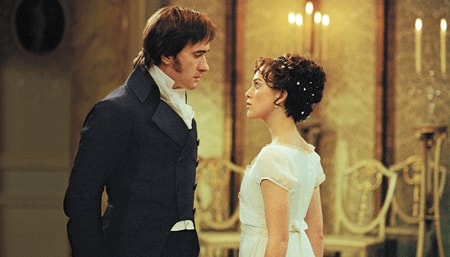
Still of Keira Knightley and Matthew Macfadyen in Pride & Prejudice (2005).
Photo Credit: Focus Features9. Historical Context
Set in the 19th century, Jane Austen’s novels are written against the backdrop of Regency England. Society was rigidly divided by class during Austen’s life, and her novels reflect deep class consciousness and a dependence on familial wealth and connections to ensure status.
As a middle-class female writer, Austen was familiar with the prejudices of British society of her time and often criticized them in her work. Through her satire of the gentry and their foibles, Austen provides readers with an intimate understanding of what life was like in 19th-century England amid foreign wars and conflicts and demands for social change.
10. The Author Herself
The final and likely most important reason to revisit Jane Austen’s novels- or pick one up, if you haven’t yet—is the author herself. The woman behind the lyrical prose, profound commentary, and immovable characters is as remarkable as her writing.
In an era when many women were denied the education to write, Austen wrote and published in secret. She was not the first female novelist, nor the last. But her work is a reminder to observe the ordinary, to try to understand one another, and never to settle for less than the life you deserve.
Featured image: Wikimedia Commons


