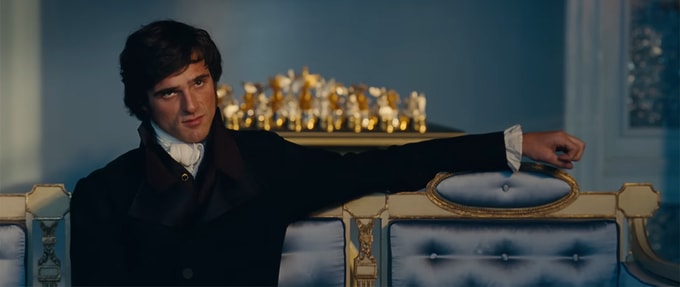
Few characters in literature have sparked as much debate as Heathcliff from Wuthering Heights. Is he a romantic hero—dark, tortured, and endlessly devoted? Or is he something far less flattering: a man whose cruelty is dressed up as passion?
To answer that, we have to look beyond the moors and into the world that created him.
The Brooding Hero: Romance’s Favorite Red Flag
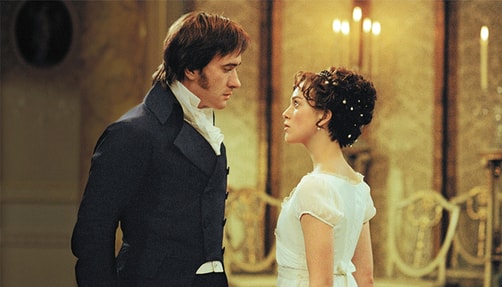
 Photo Credit: Focus Features
Published in 1847 by Emily Brontë, Wuthering Heights emerged from a rigidly stratified Victorian society, where class functioned not just as a hierarchy but as a kind of moral code. The working class was often viewed as inherently inferior—less civilized, less human—and that bias shapes Heathcliff’s experience from the moment he arrives. His origins are deliberately ambiguous, and he is described in ways that suggest he may be racially “other,” reflecting a broader tendency to exoticize and dehumanize those who didn’t fit neatly into English norms. Long before he becomes cruel, he is treated as something alien.
At the same time, the novel sits within a literary culture that romanticized the brooding, emotionally distant man. This archetype runs through Sense and Sensibility and Pride and Prejudice, where seemingly cold men are softened by love, and intensifies in Jane Eyre, where Edward Rochester embodies the quintessential tortured yet, arguably, redeemable romantic lead. Underlying these narratives is a popular 18th- and 19th-century belief: that “reformed rakes make the best husbands,” and that a man’s flaws signal depth rather than danger.
Both Emily Brontë and her sister Charlotte Brontë were writing within—and, to an extent, perpetuating—this fascination with the volatile male figure. But where Charlotte seemingly allows for redemption, Emily resists it. Heathcliff is introduced with many of the traits of a romantic hero—intense, wounded, magnetic—but he never transforms. Instead, his pain hardens into cruelty.
Heathcliff’s Upbringing: The Making of a Monster?
Heathcliff begins as a homeless orphan, brought into a household that never fully accepts him. He grows up under constant reminders that he is lesser—socially, economically, and perhaps racially, given how Mr. Linton describes him to Catherine ("a little Lascar, or an American or Spanish castaway"). There is no stable identity offered to him; instead, he becomes a blank slate onto which others project their fears and prejudices.
Catherine, in particular, treats him as both extension and accessory. Her famous declaration—“I am Heathcliff”—suggests that they are soul-tied, but it masks a deeper imbalance. Catherine has the freedom to choose her life, her status, and her partner. Heathcliff does not. He orbits her.
Their relationship is often described as equal, even fated, but it isn’t. Catherine moves between worlds; Heathcliff is shut out of them.
Years of humiliation calcify into resentment. The boy who was treated as less than human begins to treat others the same way. His cruelty doesn’t emerge in a vacuum—it mirrors the cruelty he endured.
Love or Projection?
 Photo Credit: Warner Bros. Pictures
Catherine and Heathcliff are often framed as twin flames, or two halves of the same soul. But what if their connection is less about inherent similarity and more about mutual distortion?
Catherine projects onto Heathcliff a version of herself that is wild, untamed, and free from societal constraints. Heathcliff, in turn, builds his entire identity around her. Their bond becomes less about love and more about dependency.
They don’t grow together, they both surrender to stagnation.
Heathcliff’s famous plea—“Be with me always… take any form… drive me mad!”—is not romantic in any healthy sense. It is a refusal to let go, a desire for possession that transcends life and death.
This isn’t love that nurtures. It’s love that consumes.
The Question of Isabella: Where Romance Falls Apart
Any argument that frames Heathcliff as a romantic hero collapses when we look at his treatment of Isabella Linton.
He marries her not out of affection, but as a tool for revenge. Emotional, psychological, and implied physical cruelty define their relationship.
This is where modern readers often split. Some attempt to contextualize or minimize this behavior, framing it as an extension of his love for Catherine. Others see it as sadism.
Adaptations of Wuthering Heights frequently soften this reality. Films and social media trends—yes, even TikTok edits—repackage Heathcliff as a symbol of enduring, obsessive love. The abuse becomes aestheticized, folded into a narrative of longing and heartbreak.
Misery Loves Company
 Photo Credit: Warner Bros. Pictures
Heathcliff’s cruelty doesn’t stop with Isabella. It radiates outward, affecting nearly every character in the novel. His pain becomes a justification for inflicting pain.
But at its core, his behavior reflects something deeply human: the tendency to externalize internal suffering. He cannot process rejection, so he weaponizes it. He cannot escape loneliness, so he ensures others feel it too.
“Tortured people torture people” may sound reductive, but in Heathcliff’s case, it rings true.
Still, pain explains behavior—it doesn’t absolve it.
So… Is Heathcliff Toxic?
Yes. Unequivocally.
But he is also a product of his environment—a man shaped by classism, alienation, and emotional deprivation. He is both victim and perpetrator, which is precisely what makes him so compelling.
Was he in love with Catherine? Maybe.
But his love is possessive, destructive, and ultimately self-defeating.
If Wuthering Heights teaches us anything, it’s this: toxicity isn’t passion. And misery, no matter how poetic, is not love.
Featured image: Warner Bros. / YouTube


